
This ID lets you retrieve or verify your consent settings. It stays saved for {0} months or until you clear cookies — keep a copy in case you need to reference it.
AMC89MQ329407NSADRFA09MA7SD
Required
Essential Consent
Off
On
Marketing Consent
Off
On
Analytics Consent
Off
On
Personalization Consent
Properly uses cookies and similar technologies to improve your experience, analyze traffic, and to show you relevant content and advertising.
You can accept all, reject all, or customize your privacy settings.
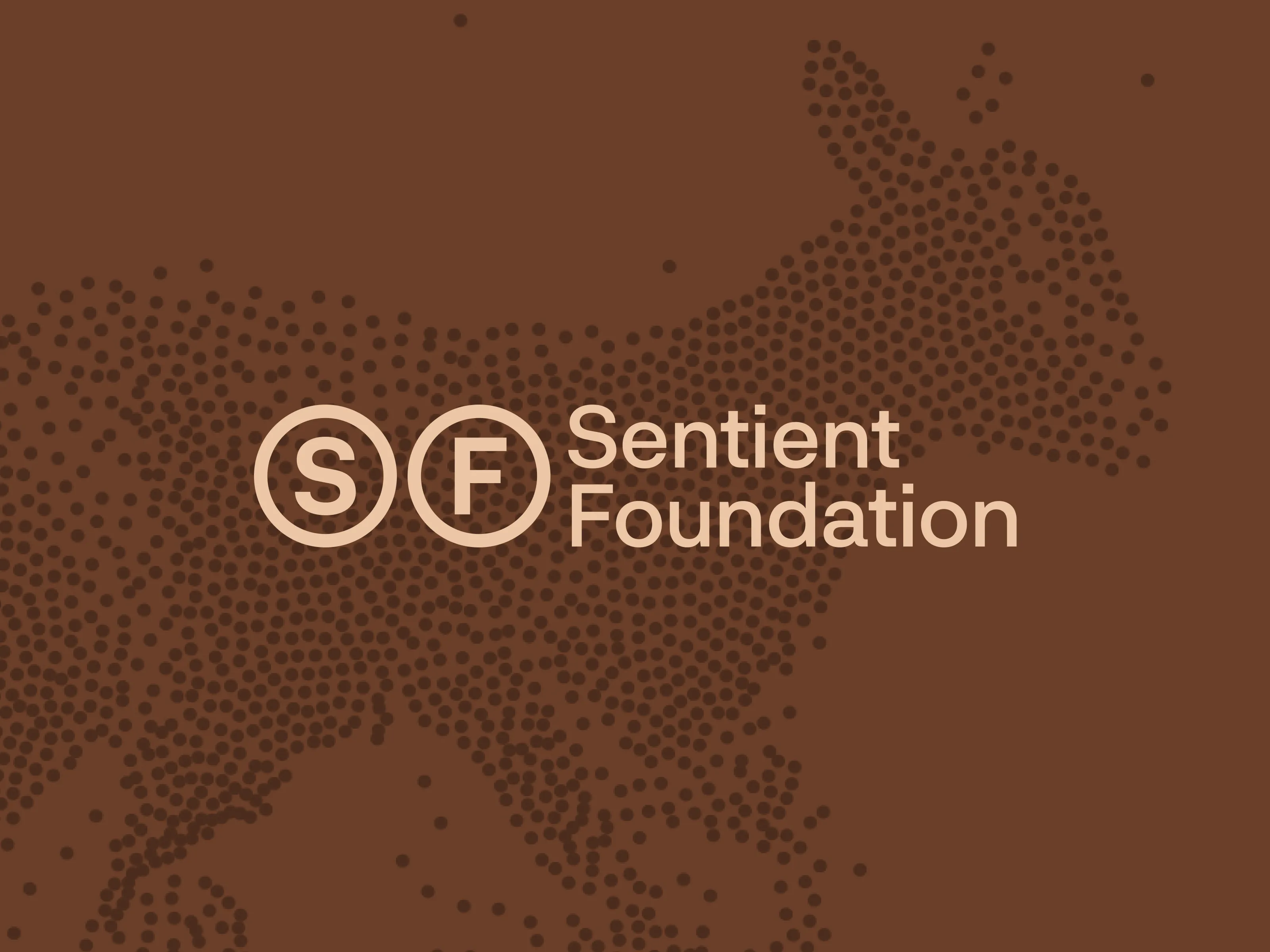
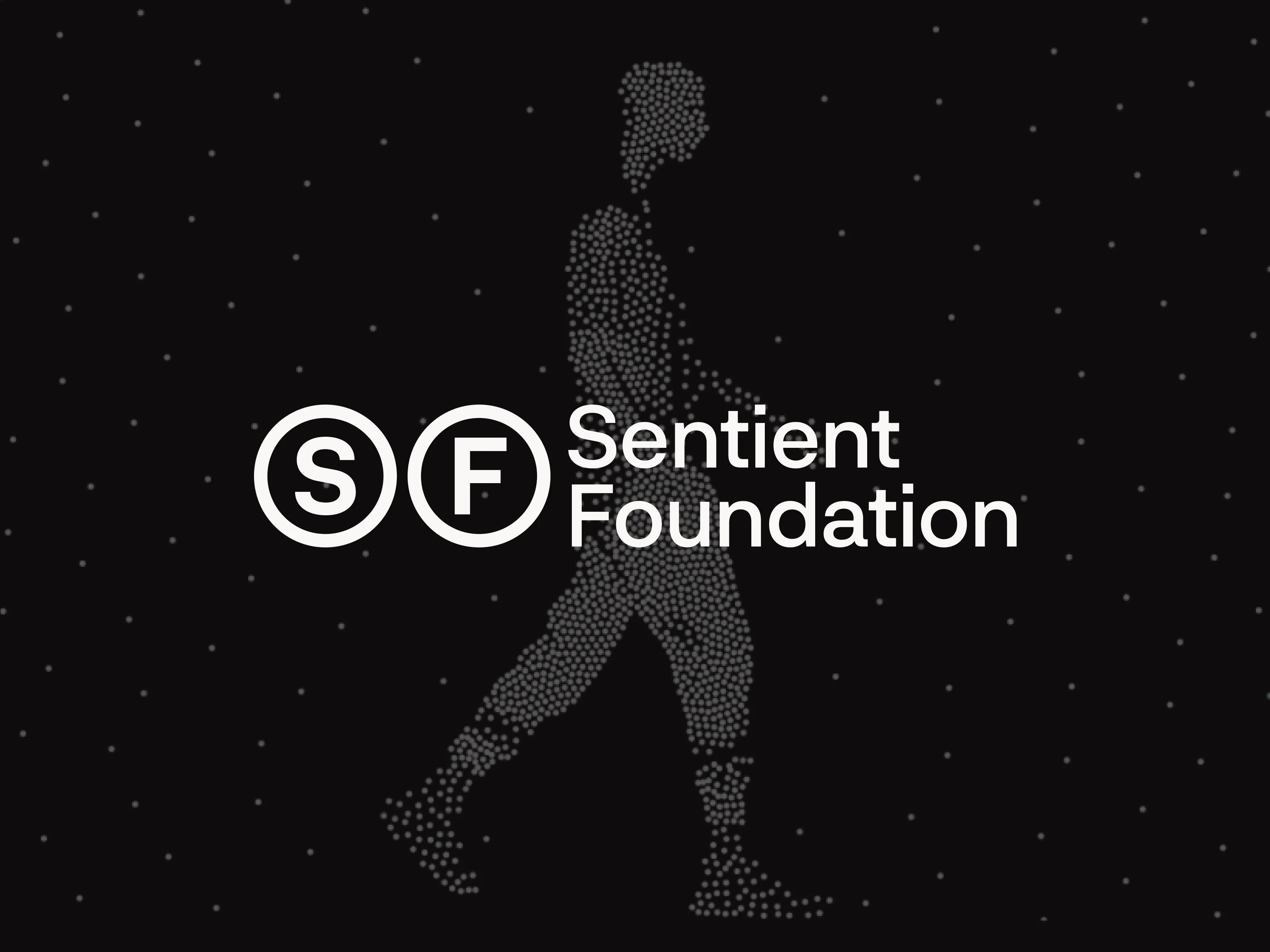
When the Sentient project landed on our desk, the brief was thin. We knew we were working with an open-source AI foundation whose name points at one of the most human things there is. Sentient: capable of feeling.
What we didn't have yet, at the start, was trust.
A question of trust
Here's the thing about trust in design. When a client trusts your skill, when they know you care about their brand and you've got what it takes to push it somewhere new, they hand you the coordinates and the map, and then they give you the wheel. They let you steer, because you know the waters you're sailing into. When that trust is still being built, the early part of the voyage is full of adventures. Often hard ones. But the kind that make the work, and the relationship, stronger for years afterward.
We always ask a client to point us toward their visual preferences. It isn't a courtesy, it's one of the key inputs for everything that comes next. This time the references pulled in completely different directions. The thread we eventually pulled on was "Dune." A frontier where a new AI universe for Sentient Foundation could emerge.
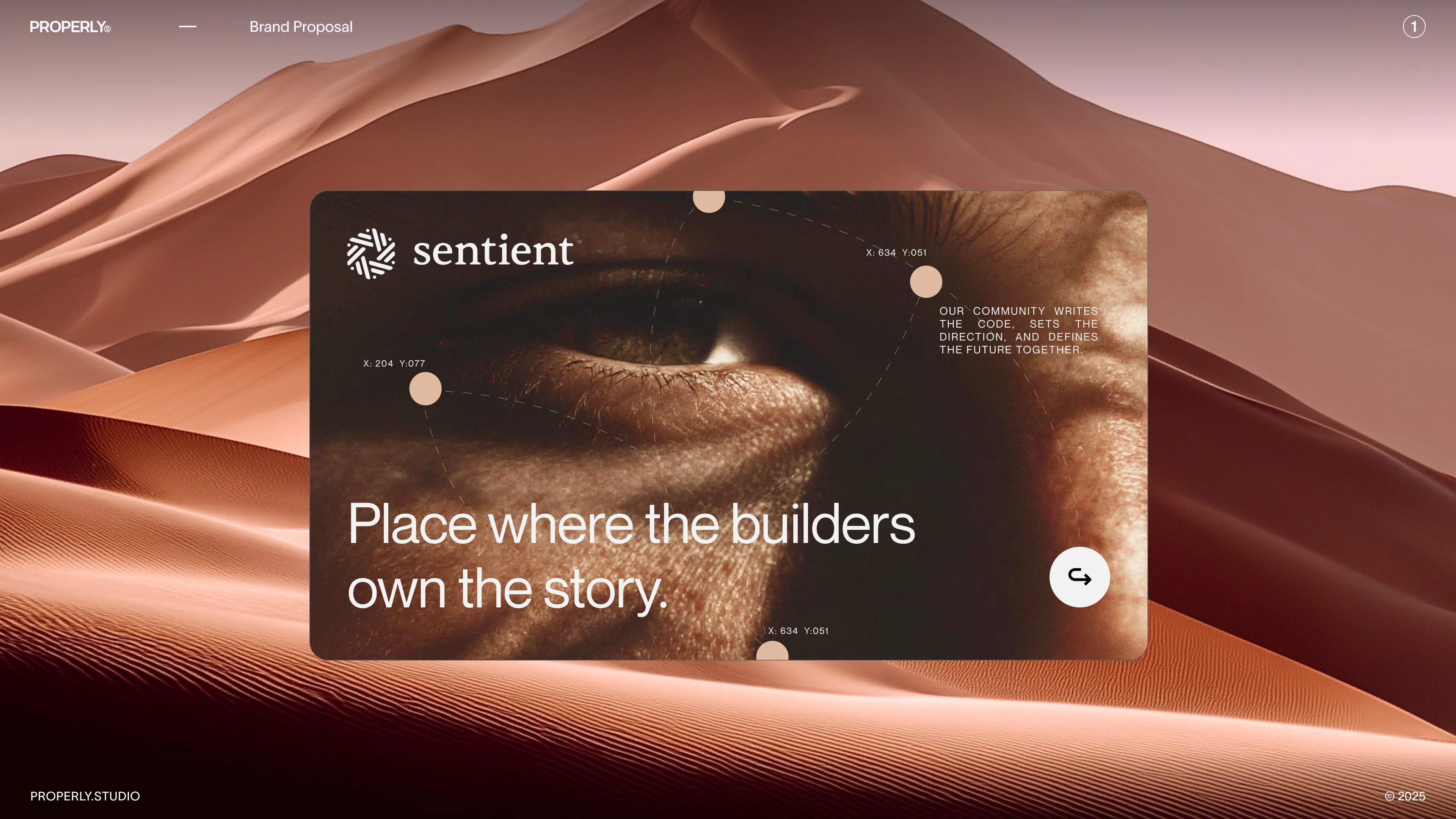
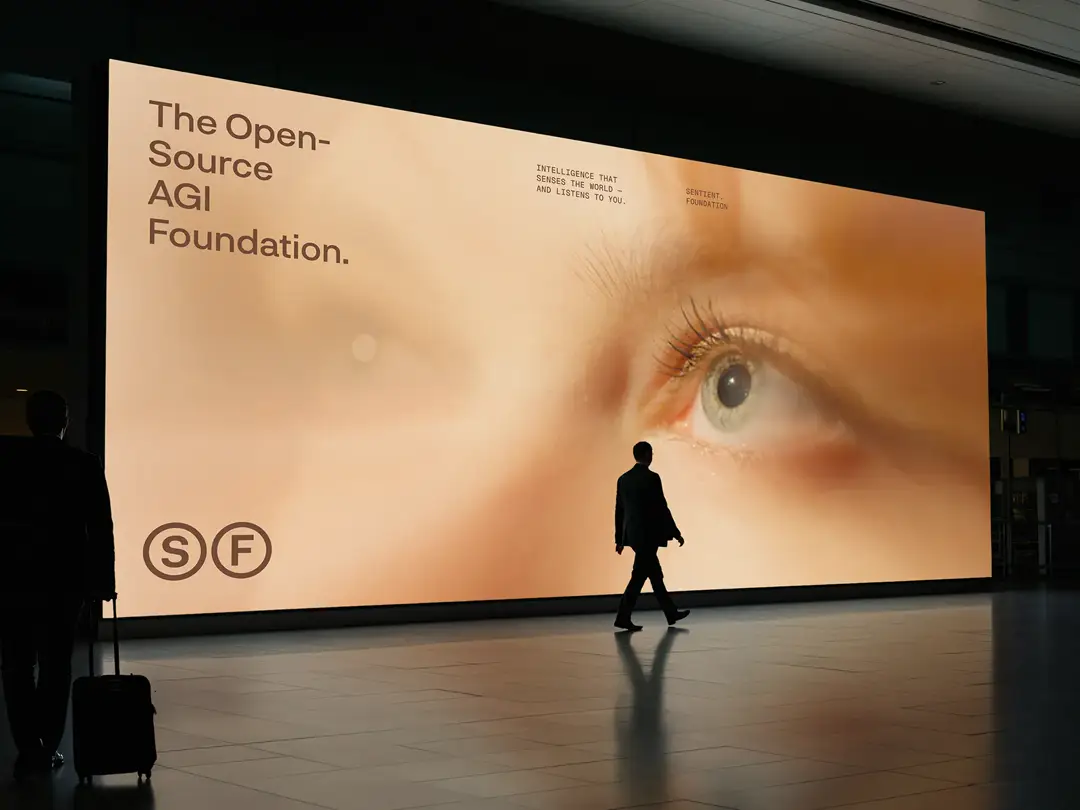
It wasn't the direction I'd have reached for first, but part of the job is to make it work. So I built the backgrounds on the desert motif and put a human being at the heart of the key visual: their sight, their ability to make an image, and the sand, whose granularity could form shapes that nodded to nature while quietly carrying the analytical side of AI.
Proposal 1: the pupil as the visual anchor, echoing the Sentient mark and pulling the human into the desert frame.
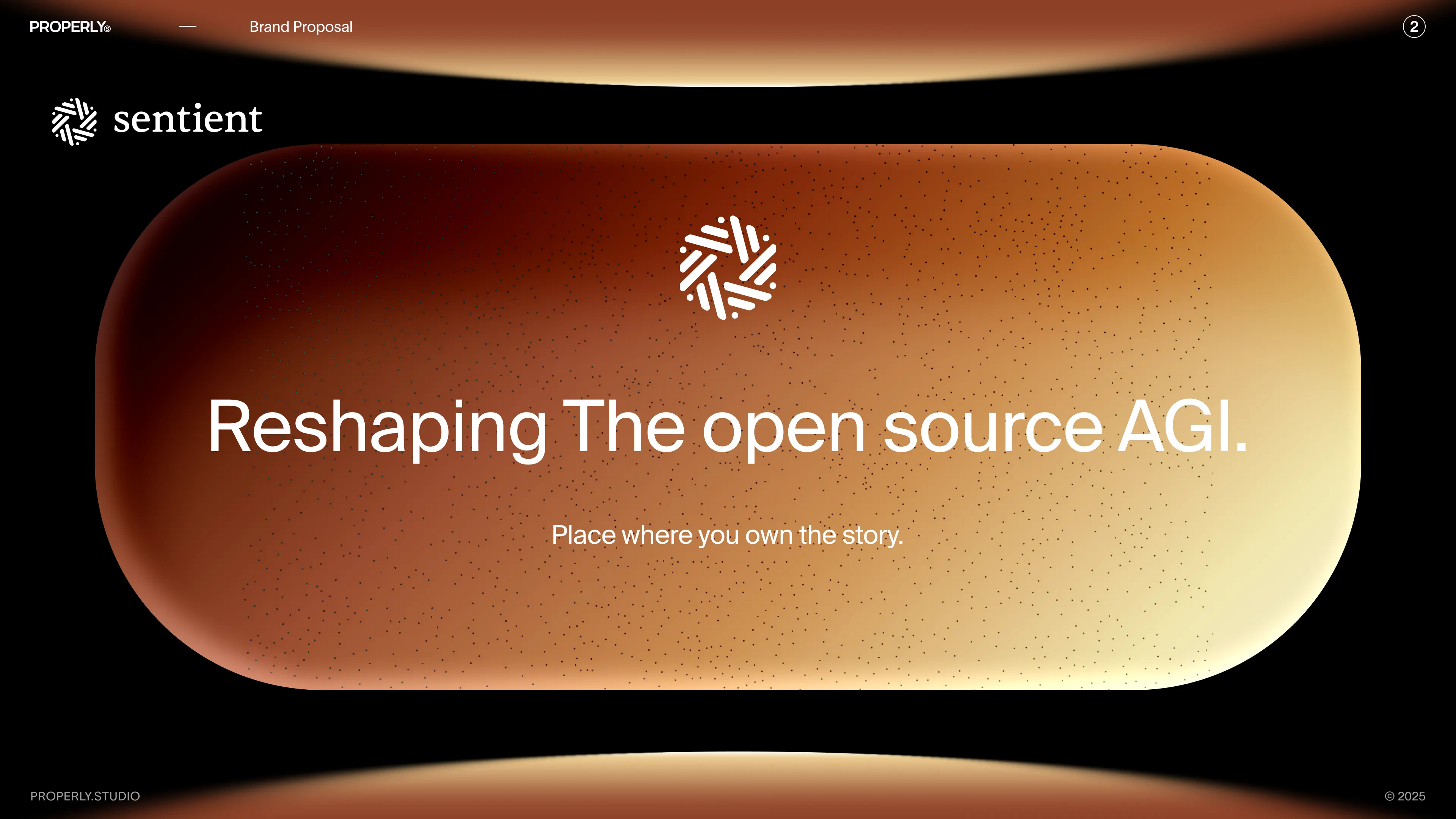
We presented two proposals. Different from each other, but sharing that common ground of Dune plus the human and nature aspect. The first response was positive, with a request to explore a few more colors. Then a few more. Then a different key visual, and a little later the thought that some ASCII-code elements might be missing.
Proposal 2: leaning further into the human side. The act of observing nature becomes the brand's core gesture.
That's the moment we recognized a feedback loop forming.
The feedback loop
A feedback loop is what happens when the conversation stops being about the brand as a whole and starts being about its individual pieces. Each note makes sense on its own, but together they pull in different directions. What looks like a request to refine the current direction turns out, each time, to be a request to start a new one.
And you know what we did? We listened.
Proposal 3: where every piece of feedback landed. Generic enough that everyone could finally see the problem.
The result was clarifying, even if it didn't feel that way at the time. The work had drifted somewhere generic, a little too close to the rest of the category, a few too many colors pulling at once. Hard to see in the moment. But it was exactly the realization the project needed, because for the first time everyone was looking at the same problem.
Communication over hard skills
This is one of the trickier moments in any design process, and it's more common than people let on. Visually, you've run out of arguments. The client has seen the thing they asked for, and it still isn't landing.
In a moment like that, communication matters as much as craft. The job becomes less about drawing and more about translating: explaining the reasoning behind each decision, and rebuilding enough trust that the client feels safe enough to hand back the wheel. That's where experience earns its keep. Knowing how to move a project off a dead point, and turn it into something everyone ends up proud of.
So we stepped back. We looked at the whole thing from a distance, named what wasn't working in the process, and named what the branding would need to get there. One of those things was a single, consistent voice on the client's side to hold the visual direction together as feedback came in, someone to keep the signal clear.
We sent the client our recommendations. And then, silence.
The pivot
There was a lot happening at the time, conferences, launches, and we'll admit we started to wonder whether we'd get this ship into port. Then the Telegram pings and we see a new person added to the channel, by the client. Gautham - the new feedback facilitator with strong background in design.
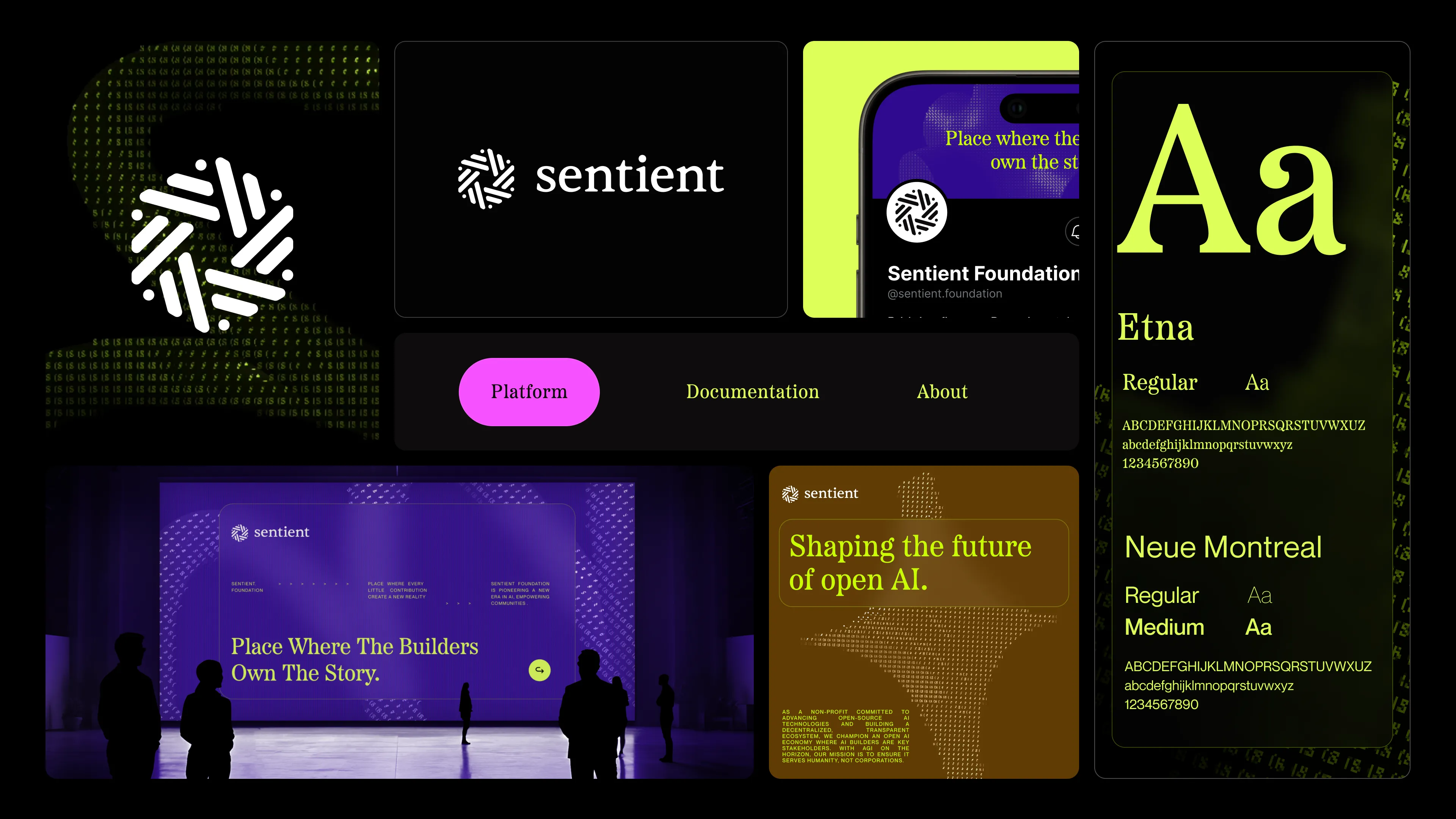
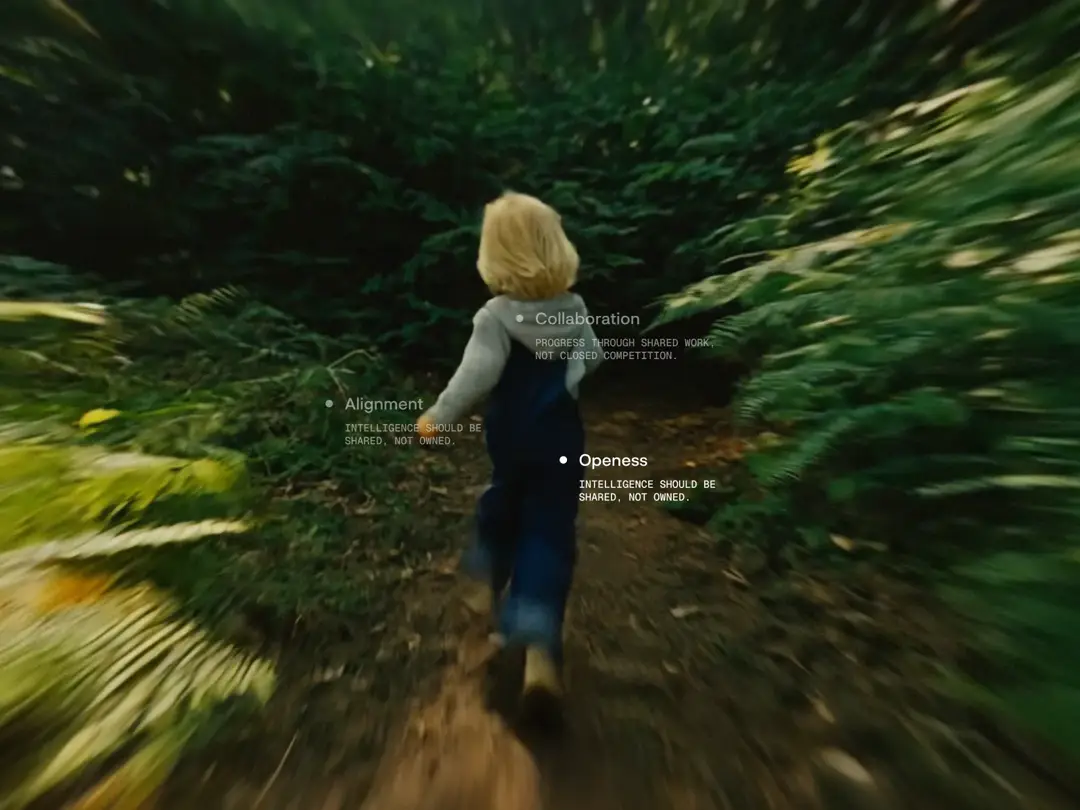
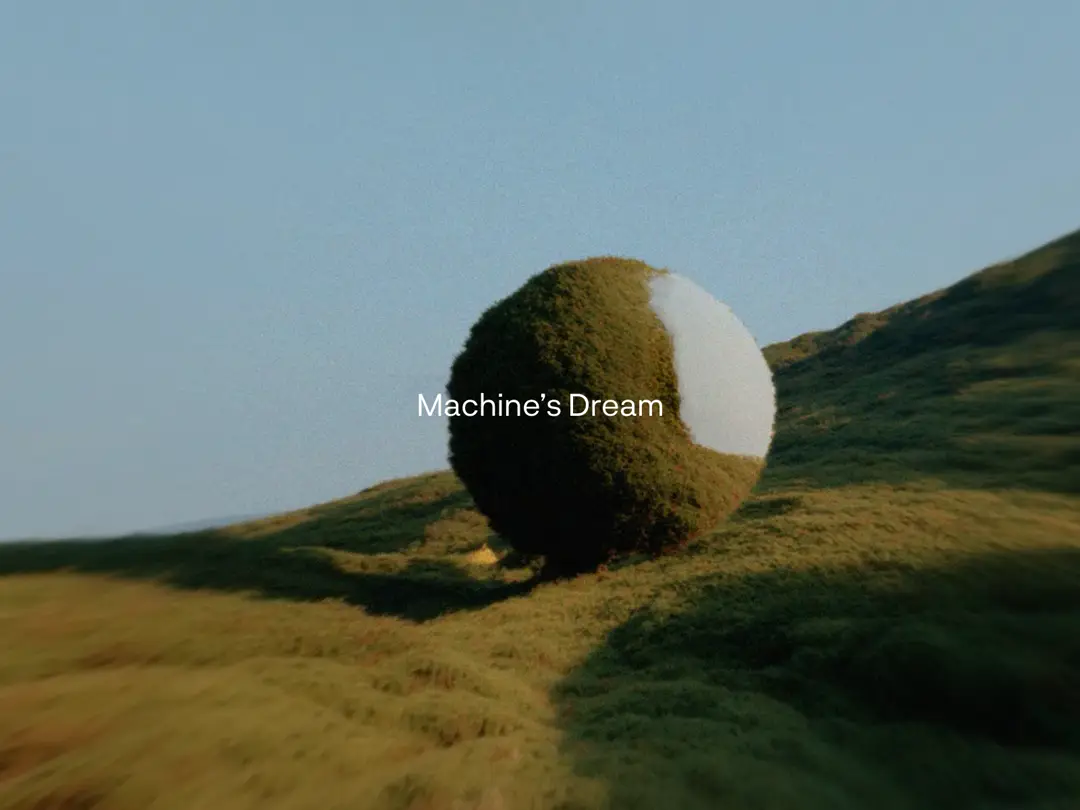
What actually turned the project, though, was the groundwork already in place. When we got on a call to align, it turned out we were almost completely on the same page about where the brand should go. The original instinct, the full focus on the human and on nature, was the right one. We built it out with the analytical, high-tech values native to AI, the same thread we'd shown in our very first proposal.
{{case-study}}
From there we had a clear direction, and we could see how much nuance it would take. We had plenty of elements that each did one job. What was still missing was the glue, the thing that would bind them into one coherent set, built for a single goal: